
The Assembly Place: Innovating across living sectors with $18.3 mil IPO launch

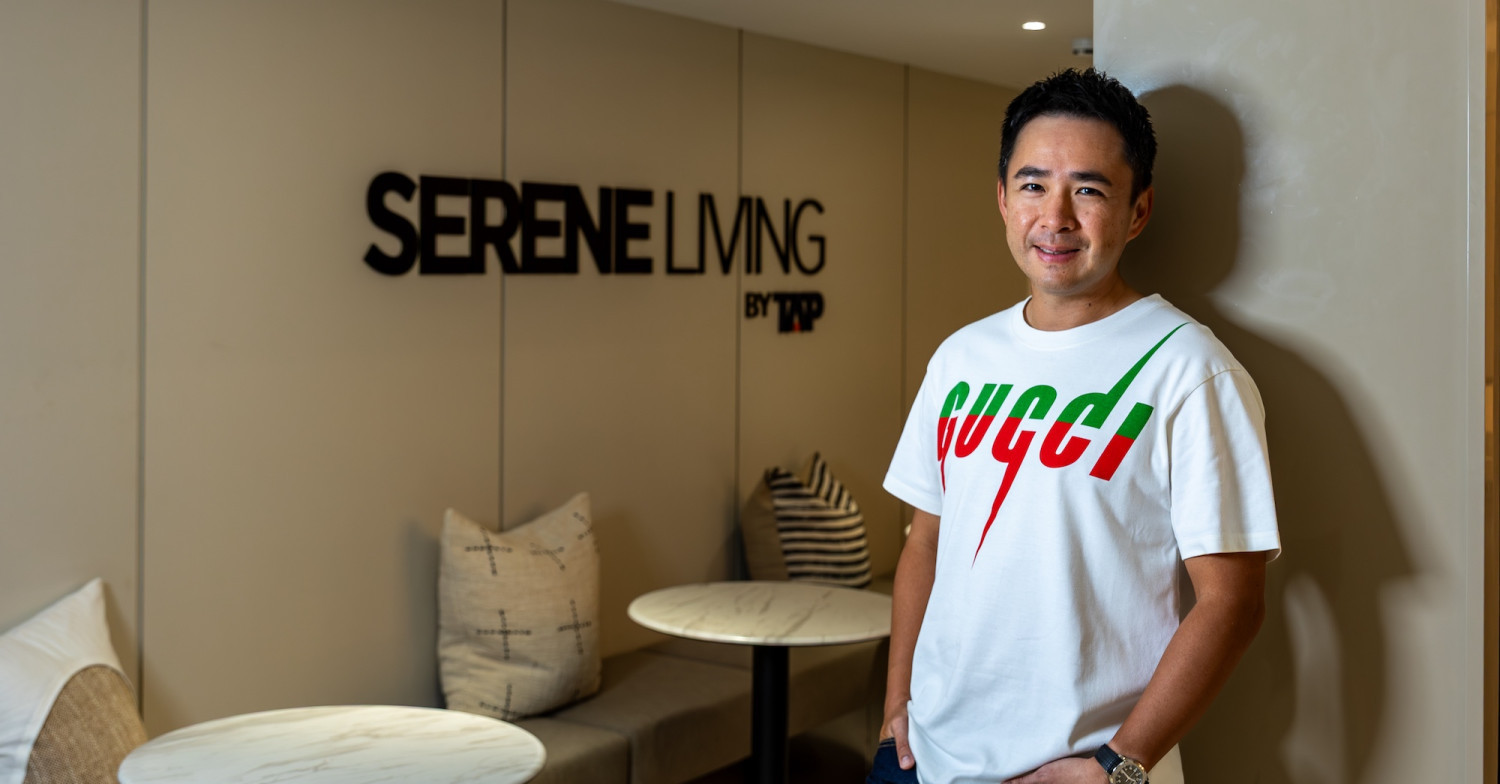
Journeying with its members has helped build loyalty and “stickiness”, says Eugene Lim, CEO of The Assembly Place. (Photo: Samuel Isaac Chua/EdgeProp Singapore)


Co-living operator The Assembly Place hopes to accompany you through your entire journey in Singapore — from undergraduate to working professional to visiting tourist. “We want our members to graduate from place to place with us,” CEO Eugene Lim says, summing up the vision.
With accommodation options ranging from student beds at $880 a month to premium serviced apartments from $2,200, Singapore’s largest community living operator (by number of keys) has built an ecosystem designed to meet people’s needs at every stage of life.
Unlike competitors offering a single product at standard rates, The Assembly Place has created and operates distinct brands for various life stages, budgets, and needs, especially catering to foreign youths aged 34 and under. Journeying with its members — from student life through career progression and later in their golden years — has helped build loyalty and “stickiness”, Lim tells EdgeProp Singapore.
This month, that philosophy takes The Assembly Place to the stock market, with plans for an $18.3 million listing on the Singapore Exchange’s Catalist Board.
Catalist IPO to fuel expansion
The homegrown lodging player aims to grow its portfolio in Singapore to over 10,000 keys by the end of 2030. This will essentially mean more than doubling the 3,422 keys it manages and operates across 100 properties (as at Dec 17, 2025).
It currently operates across five living sectors with distinct brands: residential co-living (TAP), hotels and serviced apartments (Social), student accommodation (Campus and Stay), accommodation for foreign healthcare professionals (TSTAP Residence), and intergenerational living (Commune @ Henderson).
“Hitting 10,000 keys is going to be a huge milestone,” Lim says.
To achieve the goal, The Assembly Place is seeking to raise gross proceeds of about $18.3 million in an initial public offering (IPO) and from cornerstone investors, it said in a press release announcing the IPO launch on Jan 15.
This will involve offering about 50.3 million shares at 23 cents each, comprising two million through a public offer and about 48.3 million through a placement. Cornerstone investors will subscribe for about 29.5 million new ordinary shares at the same price of 23 cents each. These investors are Apricot Capital, Asdew Acquisitions, Cache Capital, ICH Synergrowth Fund, Maybank Securities (on behalf of high-net-worth clients), Jonathan Cheah Chi Kong, and Deepak Lakhi Ramchandani.
Net proceeds from the IPO will primarily be used to expand its portfolio and to co-invest with property asset owners to acquire minority stakes in entities that hold property assets.
The Assembly Place will onboard more properties via direct lease agreements with the property owners, which is central to its scalable, asset-light business model.
It has already secured additional properties, expected to add about 610 keys to the portfolio over the next two years. Among those in the pipeline are 400 River Valley Road (the former River Valley Apartments), 163 Tras Street (Lian Huat Building), 63 and 65 South Bridge Road, 101 Lavender, and 259 Outram Road (beside the Social on Outram boutique hotel at 261 Outram Road).
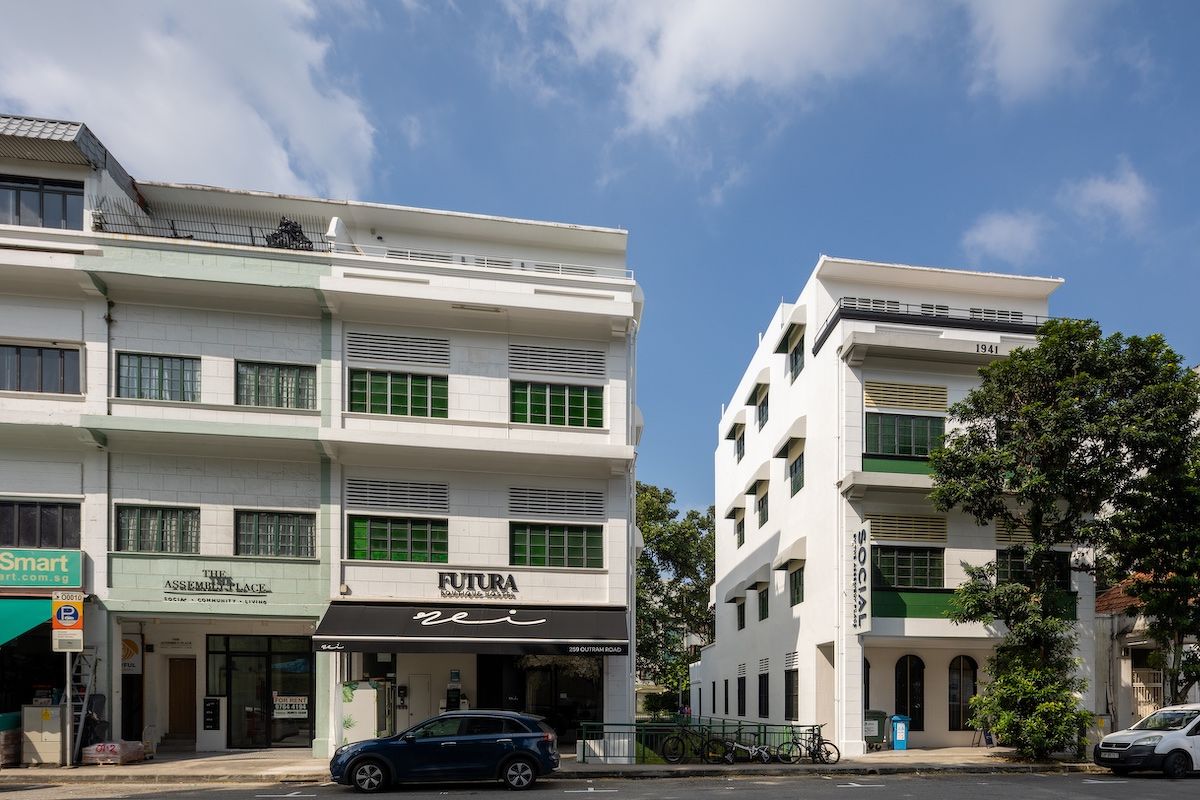
259 Outram Road (middle) is among the additional properties that the Assembly Place has secured in its pipeline. (Photo: Samuel Isaac Chua/EdgeProp Singapore)
The company also intends to pursue strategic alliances and joint ventures with established partners to pool operational expertise and diversify into new living sectors, such as expanding into the workers’ dormitory business.
Given how well Commune @ Henderson has been performing thus far, Lim hopes to expand the inter-generational co-living concept as well. Creating spaces where the young and old can mingle and bond has been “very meaningful”, he says, as it contributes to the seniors’ active ageing.
Post-listing, Singapore will remain the primary focus. That said, The Assembly Place still plans to eventually grow its overseas footprint by bringing its community-driven living solutions to markets across Southeast Asia.
“We are always of the view that it’s only when you hit 10,000 keys in Singapore that you cement yourself at the pole position, as the leading community living operator. Then, when we go overseas, there’s more credibility,” Lim says.
It has taken the first step in its overseas expansion by securing a site in Malaysia: a 66-key property in Bangsar, Kuala Lumpur. This will be a hotel with co-living elements under the Social brand, expected to be operational in 2026.
Mapping the member journey
The ambitious expansion plans build on a foundation of steady growth and market dominance. The Assembly Place leads the industry with a 34% market share by number of keys as of Sept 30, 2025, according to a co-living industry report prepared by real estate consultancy Knight Frank in the IPO offer document.
Across its portfolio, occupancy rates have exceeded 90% since FY2022, according to the Jan 15 press release.
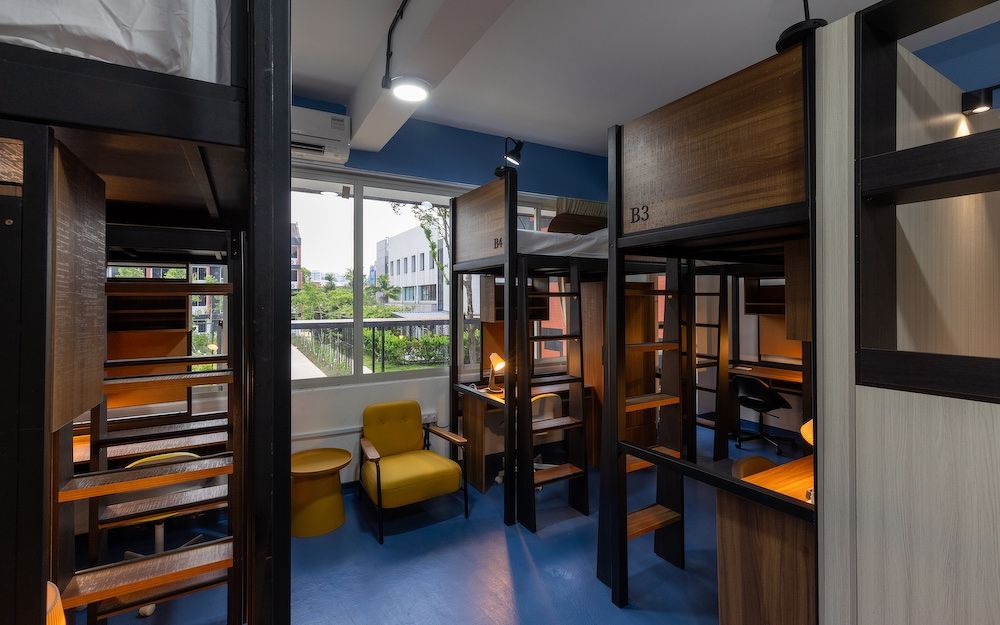
A university student may wish to get a bed at Campus, from $880 per month. (Photo: Samuel Isaac Chua/EdgeProp Singapore)
With most of its members aged 34 or younger and hailing from other countries, the company has honed its focus on a demographic that Lim describes as educated, connected through social media, and seeking the “finer things in life”. Crucially, these youths who come to Singapore for school, work or travel also hope to be part of a community of like-minded people. Event activation is therefore critical.
Capturing this market and journeying with them calls for the flexibility to serve varying budgets and needs. That is where The Assembly Place’s multi-brand strategy comes into play. And it continues to develop new concepts to fill remaining market gaps, Lim says.
For example, a foreign university student arrives in Singapore for her undergraduate studies. The Assembly Place offers campus-style accommodation from $880 per bed per month, significantly cheaper than the $3,000 one-bedroom studio apartments that would stretch most students’ budgets.
A few years later, when that same student graduates and clinches their first job with an entry-level salary, The Assembly Place has another option ready: “TAP Lite” co-living rooms from $1,250 a month, at properties like its Penhas Road location in Lavender.
Continue climbing the career ladder to secure a bigger paycheque, and she may then wish to upgrade to a higher-end en-suite unit, such as at Serene Living, for $2,200 a month. If she eventually returns to her home country and visits Singapore again as a tourist, she can stay at hotels by The Assembly Place and enjoy member benefits.
The progression is deliberate, designed to create what Lim calls "stickiness" — a multi-year relationship that outlasts the typical transactional landlord-tenant arrangement, all while staying plugged into the same community and ecosystem of properties.
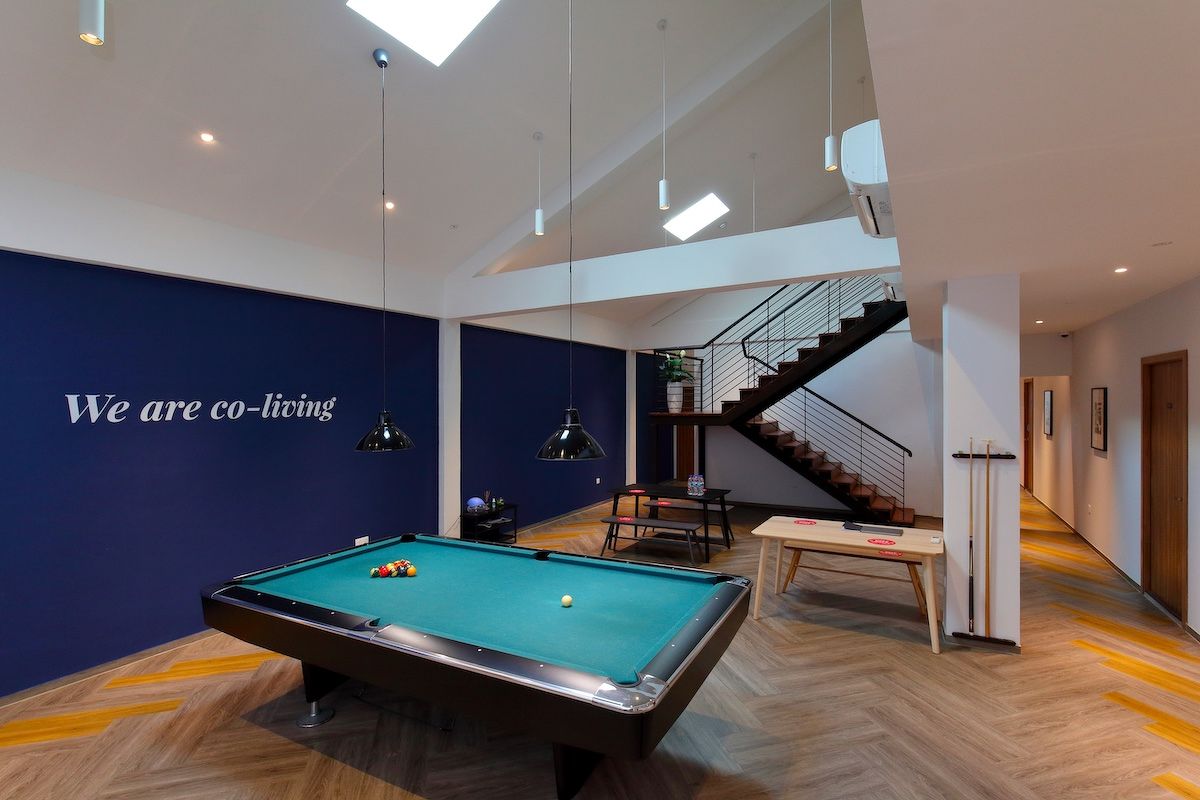
A communal area at the 96 Owen property. (Photo: Samuel Isaac Chua/EdgeProp Singapore)
Forward-thinking at scale
Maintaining this approach, which has made the Assembly Place the “most diversified” community living operator in Singapore (according to the Knight Frank industry report), requires relentless brand development.
It is a process Lim acknowledges can be “very tiring” but necessary to provide a wide range of choices to their members.
“We constantly try to innovate and be forward-thinking, to come up with new brands or concepts and stay relevant. I think it’s a must to do that,” he says.
Often, in brainstorming concepts, he draws inspiration from his childhood and school days. For instance, students would gather around campfires during his time with the Boys’ Brigade, and fresh graduates are likely to gravitate towards budget accommodation during their backpacking trips.
Digitalisation is also integral to the company’s strategy. Managing thousands of keys across 100 properties might suggest a sprawling workforce, but The Assembly Place operates with just over 40 employees. That reflects an employee-to-key ratio of 1:81.
The lean structure is enabled by a proprietary customer relationship management (CRM) system built three years ago in the company’s early days, a decision Lim sees as “very painful but important”.
“Before we grew to who we are today, just before we hit 1,000 keys, we hired two coders, who are still with the company today, to build our own CRM system," he says. Its APIs (application programming interfaces) are linked to e-signing documents, tenancy agreements, Zero accounting software, and the members’ social mobile app. The centralised system monitors service requests in real time, tracks occupancy and lease cycles, and manages feedback loops efficiently.
The Assembly Place believes it is the only co-living operator in Singapore with an in-house developed CRM system and mobile app.
Capturing unmet demand
Prospects are “positive” in the living sectors served by the Assembly Place, the Knight Frank report states.
Driven by a steady inflow of Employment Pass (EP) holders into Singapore, estimated to increase 1% per annum over the next five years, the residential co-living segment is expected to reach about $9.7 billion in addressable market value (AMV) by 2030.
The hotels and serviced apartments segment’s AMV could reach $2.5 billion by 2030, based on room revenue from economy and mid-tier hotels, amid the Singapore Tourism Board’s proactive tourism development plans.
As for student accommodation, international student enrolment in the city-state could grow by 2.5% per annum over the next five years, reaching an AMV of $1.6 billion. Meanwhile, accommodation for foreign healthcare professionals could reach an AMV of $27 million, given the government’s plans to build a healthcare workforce of 82,000 by 2030, according to Knight Frank.
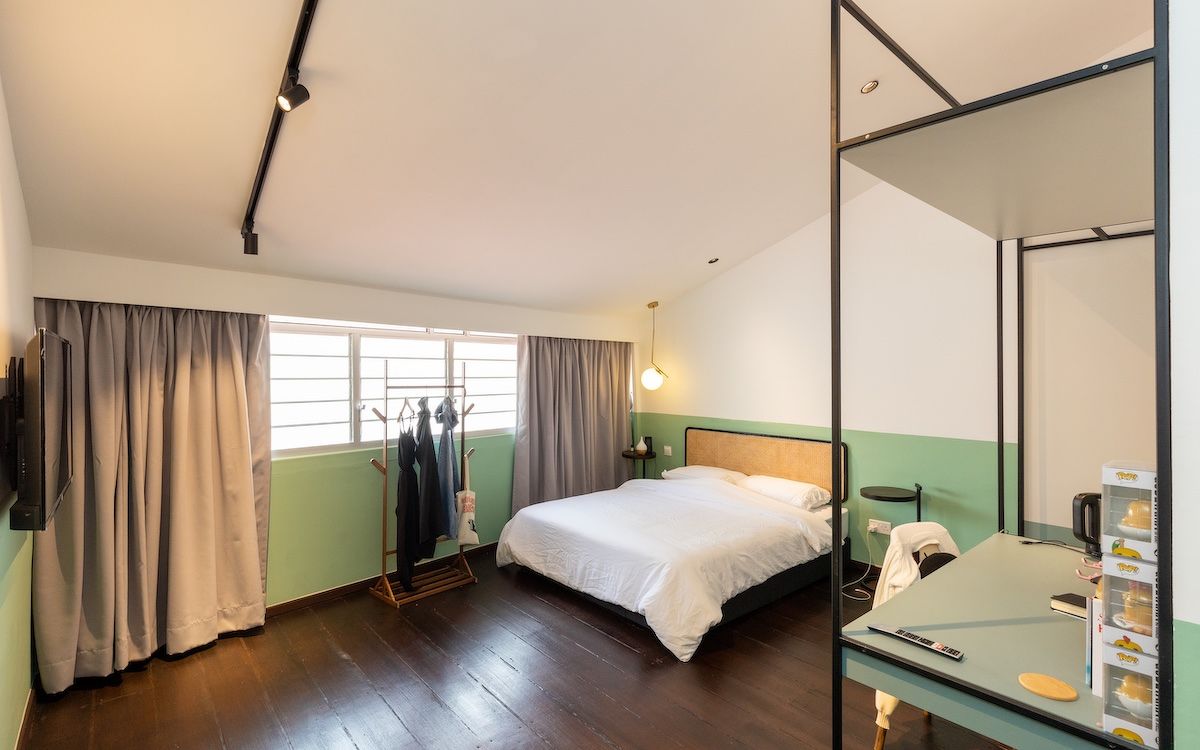
A “TAP Luxe” en-suite unit going for about $2,450 a month.
Moreover, Lim notes that co-living operators fill a specific market gap: short- to medium-term stays that fall through the cracks of conventional rental markets.
"If you come to Singapore to work on a three-month, six-month project, you will come to a community-living player like us," he says. This is because retail property investors who own HDB flats, condo units or studio apartments typically require a minimum one-year lease, while big-brand serviced apartments can cost around $4,000 to $5,000 a month, which may be too pricey for young professionals on temporary assignments.
"We fill that gap, and it has been very resilient, at least for us,” he says.
Cultivating partnerships
At the same time, being the largest co-living operator in Singapore gives it economies of scale and leverage in negotiating with landlords and other service providers, leading to more favourable commercial terms.
Fostering these long-term relationships with landlords has been core to the Assembly Place’s asset-light, lease-based model.
“There’s a lot of goodwill between the landlords and us,” Lim says. “Singapore is a very tight space, everybody knows each other. When renewing tenancies with landlords, a lot of it has to do with the relationship, and we have been able to manage that well.”
He attributes this to two factors: reliable rent payments and proactive property maintenance. "Fundamentally, that's the most important," he says of never defaulting on rent. On upkeep, The Assembly Place tends to handle any minor repairs itself, even when contractually entitled to pass costs through to the landlord. “Even though we have a repair clause [in the lease], we don’t bother the landlord with all the nitty-gritty, and will solve it out of goodwill,” he adds.
The company's brand philosophy also helps cement relationships with the asset owners. In respecting each property's architectural intent, streetscape, historical context and sentimental value — sometimes creating bespoke brands that pay homage to the property itself, such as Serene Living at the Serene Centre — the team demonstrates a level of care that transcends a standard rental agreement.
"We must always remind ourselves that the asset is bigger than the brand," Lim says.
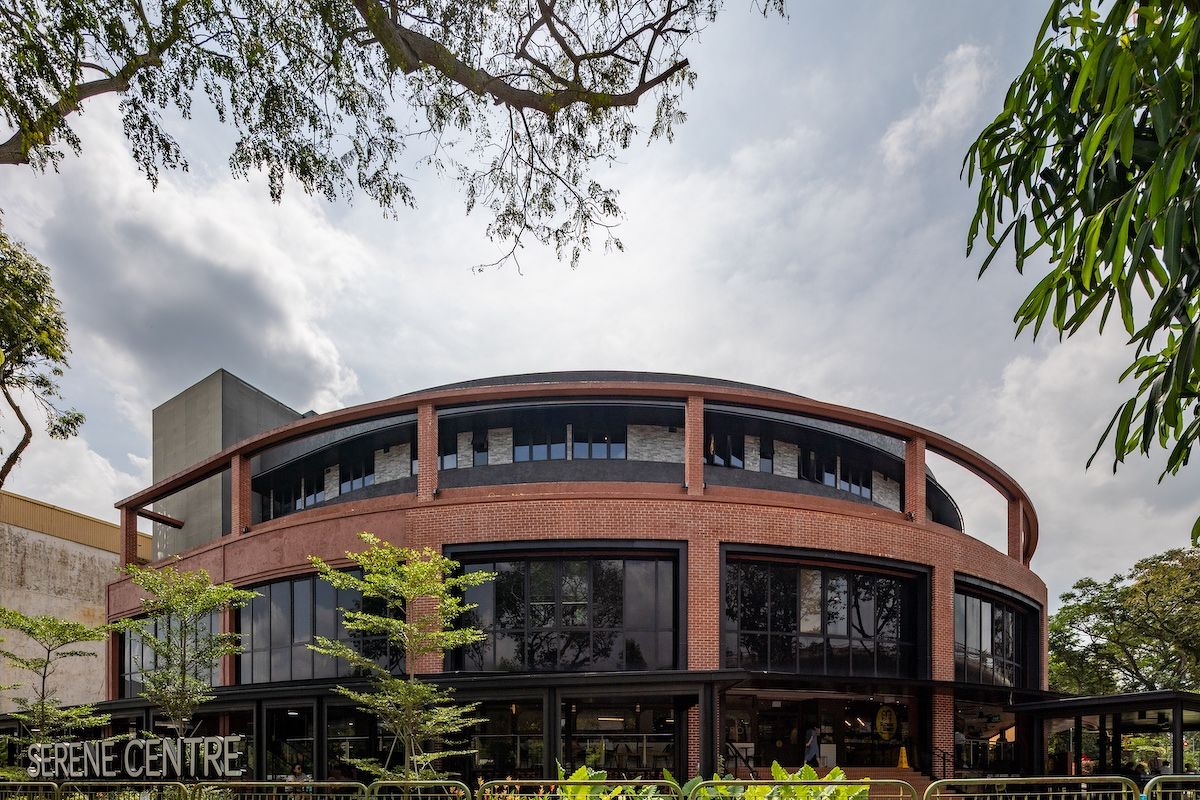
Serene Centre marks the Assembly Place’s first foray into retail mall management. The revamped development now includes co-living spaces. (Photo: Samuel Isaac Chua/EdgeProp Singapore)
Looking ahead, he returns to the community-centric mission that underpins The Assembly Place, rooted in the idea that housing, particularly for young people far from home, can offer more than shelter, fostering social ties and a sense of belonging.
He aspires for its spaces to become landmarks in people’s lives, where they find their footing and community: “Our vision is that when you walk past a TAP location, you will tell everyone that you used to stay there, and that TAP was a defining part of your youth.”
For more news and analysis, read our weekly e-paper. Prefer a print copy? Get it delivered to your home every Monday.
Follow Us
Property updates, 24/7.


Subscribe to Newsletter
Market insights, delivered weekly.

Top Articles
Search